



posted 16th March 2026
Did you know that a well-designed paved garden space can increase your property value by up to 10-15% while creating an inviting outdoor room for year-round enjoyment? In Dorset's variable climate, with its mix of wet winters and sunny summers, choosing the right garden paving transforms ordinary yards into stunning, functional retreats.
Key Areas We Will Cover
Popular types of garden paving materials and their pros and cons
Essential steps for planning and designing your paved area
Professional installation techniques for lasting results
Maintenance tips to keep your paving looking pristine
How expert landscapers ensure precision and durability
Garden paving forms the foundation of many beautiful outdoor spaces, offering practical surfaces for patios, paths, seating areas, and more. Whether you're dreaming of a sleek modern patio or a charming traditional path, high-quality paving enhances usability, improves drainage, and complements Dorset's natural landscapes. This guide explores everything from material choices to installation best practices, helping you make informed decisions for a durable, eye-catching result.
Types of Garden Paving Materials
Garden paving comes in various materials, each suiting different styles, budgets, and practical needs. Here's a breakdown of popular options in the UK, particularly suited to Dorset's weather conditions.
Natural Stone Paving
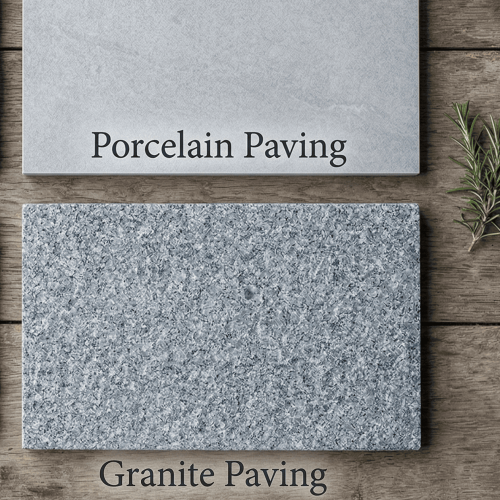
Natural stones like sandstone, limestone, granite, and slate bring timeless elegance with unique textures and colours.
Pros: Highly durable, frost-resistant when properly sealed, natural beauty with variation that adds character, slip-resistant surfaces ideal for wet Dorset winters.
Cons: Higher initial cost, requires sealing to prevent staining, variations in thickness may need skilled laying.
Porcelain Paving
A modern favourite, porcelain tiles mimic natural stone but offer enhanced performance.
Pros: Extremely low maintenance, stain-resistant, fade-proof, lightweight yet strong, excellent for contemporary designs, superior frost resistance.
Cons: Can feel cooler underfoot, higher upfront cost than basic concrete options.
Concrete Paving and Block Paving
Pre-cast concrete slabs or blocks provide versatility and affordability.
Pros: Wide range of colours, patterns, and textures, cost-effective, durable for patios and driveways, easy to repair individual units.
Cons: May fade over time without quality manufacturing, potential for cracking if sub-base is inadequate.
Gravel or Permeable Options
Loose gravel or permeable blocks support eco-friendly drainage.
Pros: Budget-friendly, excellent permeability to comply with UK regulations for driveways over 5m², low-maintenance in some cases.
Cons: Can shift under heavy use, weeds may appear without proper edging, less formal appearance.
Planning Your Garden Paving Project
Start with careful planning to avoid costly mistakes. Measure your space accurately, consider drainage (essential in Dorset to prevent pooling), and think about how the paving integrates with your garden's overall design. Sketch layouts or use digital tools for visualisation. Factor in local planning rules, especially for driveways, where permeable surfaces often avoid the need for permission.
Professional landscapers use advanced techniques like drone mapping and camera surveys to create precise plans that match your property's contours and vision.
How to Install Garden Paving Professionally
Proper installation ensures longevity and prevents issues like sinking or cracking.
Mark and excavate the area to the required depth (typically 150-250mm depending on use).
Lay a sub-base of compacted MOT Type 1 or similar aggregate for stability and drainage.
Add a bedding layer — full mortar for slabs or sand for blocks — avoiding "dot and dab" methods that lead to failure.
Lay the paving with consistent joints, using spacers for even gaps.
Fill joints with appropriate mortar or polymeric sand for weed resistance.
Compact and cure properly.
For best results in Dorset's clay-heavy soils, a robust sub-base proves crucial to combat movement.
Maintenance Tips for Long-Lasting Paving
Regular care keeps your investment looking fresh.
Sweep regularly to remove debris.
Apply sealant to natural stone every 1-2 years.
Use pressure washing cautiously on lower settings.
Remove weeds promptly and treat stains immediately.
Inspect for loose units annually and re-level as needed.
Conclusion
Garden paving elevates your outdoor space, blending functionality with beauty while standing up to Dorset's weather. By selecting suitable materials, planning thoughtfully, and prioritising expert installation, you create a durable feature that enhances enjoyment for years. Whether opting for elegant natural stone or low-maintenance porcelain, quality paving delivers lasting value.
Get Started Today
Ready to transform your Dorset garden with expert garden paving? Contact Forevergreen Services for a free, no-obligation quote. Our team specialises in precision landscaping, using technology like drones for accurate designs tailored to your property.
Call us on 01305 564864
Email: Info@forevergreenservices.co.uk
Visit us at: Unit 8 Lower Burton Farm Buildings, Dorchester, Dorset, DT2 7RZ
Let’s bring your outdoor vision to life.